


Abstract Background Research shows that simulation-based training can increase knowledge and skills among pregraduate healthcare students, that simulation-based training of technical skills places the participants higher on the learning curve..
Read More
Abstract Extracorporeal carbon dioxide removal (ECCO2R) is increasingly used in clinical practice as a means of facilitating protective mechanical ventilation and reducing the risk of ventilator-induced lung injury (VILI) in patients..
Read More
Abstract Objective To investigate the relationship between arterial oxygen partial pressure (PaO2) and all-cause mortality of post–cardiac surgery patients. Design A retrospective cohort study based on the Medical Information Mart..
Read More
Abstract Cytokine storm (CS) is a severe systemic inflammatory syndrome characterized by the excessive activation of immune cells and a significant increase in circulating levels of cytokines. This pathological process..
Read More
Abstract As extracorporeal cardiopulmonary resuscitation (ECPR) is increasingly utilized for refractory cardiac arrest in adults, we learn significantly more about resuscitation in ways that were not applicable, or even available..
Read More
Abstract Introduction Postoperative acute kidney injury (AKI) is a common postoperative complication in cardiac surgery, with varying reported incidences and prognostic factors. Renal hypoperfusion is believed to be a key..
Read More
Abstract The geometric configuration of fiber bundles plays a critical role in gas transfer for membrane oxygenators; however, experimentally studying its impact on gas transfer distribution is challenging. This study..
Read More
Abstract The paper published in this issue of the ICVTS by Green and colleagues [] from the University of Hull in the UK addresses an often underestimated yet increasingly recognized issue in..
Read More
Abstract Introduction Blood transfusion is associated with adverse events and should be prevented. Preoperative identification of patients at risk is necessary and makes subsequent preventive intervention possible. Many risk models..
Read More
Abstract Background The human bioaccumulation of micro- and nano-plastics (MNPs) is increasingly being recognised in the aetiology and pathophysiology of human disease. Objective This systematic scoping review aims to provide..
Read More
Abstract Background: This study addresses the critical need for timely and accurate diagnosis of early postoperative infection (EPI) following cardiac surgery. EPI significantly impacts patient outcomes and healthcare costs, making..
Read More
Abstract Background:Mechanical circulatory support, and specifically extra-corporeal membrane oxygenation, plays a critical role in managing paediatric cardiac patients with severe heart failure. Whilst these technologies are vital for bridging patients..
Read More
Abstract A venous reservoir (VR) is crucial for safe blood volume regulation during cardiopulmonary bypass (CPB) procedures. Currently, blood volume measurement in VRs relies heavily on visual inspection, which limits..
Read More
Abstract Background/Objectives: Nutritional support is a critical yet challenging aspect of care for pediatric patients requiring extracorporeal membrane oxygenation (ECMO). Malnutrition is prevalent in this population and is associated with..
Read More
Abstract Extracorporeal membrane oxygenation (ECMO) is a medical device that provides temporary external circulation and respiratory support during heart-lung procedures, substituting for heart and lung function to alleviate their burden..
Read More
Abstract The use of veno-arterial extracorporeal membrane oxygenation (VA-ECMO) for temporary mechanical circulatory support (MCS) is a common treatment in patients with cardiogenic shock (CS) but is associated with high..
Read More
Abstract Abstract Objective To investigate cerebral autoregulation impairment during neonatal cardiac surgery. Design A retrospective observational study. Setting Single-center, university teaching children’s hospital. Participants Neonates undergoing surgery for critical congenital..
Read More
Introduction Superlatives and acronyms abound in this year’s edition of annual noteworthy literature for Seminars in Cardiothoracic and Vascular Anesthesia. By the numbers, over 22 000 publications from 2024 were screened, and approximately..
Read More
Abstract Background: Inhalational anesthetic agents are a major source of potent greenhouse gases in the medical sector, and reducing their emissions is a readily addressable goal. Nitrous oxide (N2O) has..
Read More
Abstract Extracorporeal membrane oxygenation (ECMO) is a life-saving cardiopulmonary bypass technology for critically ill patients. Patients treated with ECMO receive multiple drugs to treat critical illnesses, prevent infections, and maintain..
Read More
Abstract Introduction: Extracorporeal cardiopulmonary resuscitation (eCPR) has demonstrated patient outcome-driven benefits for those with out-of-hospital cardiac arrest in refractory ventricular fibrillation/pulseless ventricular tachycardia but remains an infrequent procedure requiring hands-on training...
Read More
Abstract Background Postoperative delirium (POD) remains a significant complication following cardiopulmonary bypass (CPB) surgery, particularly in middle-aged patients who constitute the majority of this surgical population. While intranasal insulin (INI)..
Read More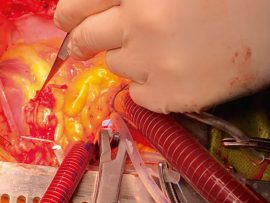
Abstract Purpose of review Coronary artery bypass grafting, revascularization by percutaneous coronary intervention, and heart valve surgery are crucial therapeutic interventions for patients with various cardiovascular diseases. The objective of..
Read More
Abstract Extracorporeal cardiopulmonary resuscitation (ECPR) is a time-critical, resource-intensive intervention used in select cases of refractory cardiac arrest. Its success depends on rapid initiation, streamlined workflows, and coordination across multidisciplinary..
Read More
Abstract The aim of this study was to develop a scoring tool to estimate the probability of survival following extracorporeal rewarming in patients suffering hypothermic cardiac arrest. This is a..
Read More
Abstract Although venovenous (VV) extracorporeal membrane oxygenation (ECMO) is a life-saving intervention for trauma patients with severe respiratory failure, its mortality rate is 27%, and optimal metabolic markers for its..
Read More
Abstract IMPORTANCE: Cardiopulmonary bypass (CPB) surgery is associated with changes in the intestinal microbiome. Metabolism of tryptophan into the indole pathway is entirely facilitated by the intestinal microbiome, and indole..
Read More
Abstract Objective This study aims to utilize HFO analysis to enhance existing SSEP modality and develop it as a bedside diagnostic tool for acute brain injury (ABI) detection in Extracorporeal..
Read More
Abstract Background Routine clinical debriefings (RCDs) have been shown to improve communication, team reflexivity, and safety in clinical settings. When combined with incident reports (IRs), RCDs offer a potential tool..
Read More