


Abstract Donor shortage is a major limitation in organ transplantation. Several studies have reported that extracorporeal membrane oxygenation (ECMO)-assisted organ donation can be successfully completed without inducing warm ischemia in..
Read More
Abstract Millions of blood components including red blood cells, platelets, and granulocytes are transfused each year in the United States. The transfusion of these blood products may be associated with..
Read More
Abstract Allogenic blood is a scarce, precious, and expensive resource that is not always available on demand. After termination of cardiopulmonary bypass, a large amount of residual pump blood remains..
Read More
Abstract The effects of cardiopulmonary bypass on patients who have active or dormant malaria are unknown. What is known is that malaria-induced hemolysis can be exacerbated by cardiopulmonary bypass. We..
Read More
Abstract Veno-venous (VV) extracorporeal membrane oxygenation (ECMO) has become an integral part in the rescue therapy of severe acute respiratory distress syndrome (ARDS) and may be lifesaving in patients with..
Read More
Abstract There is limited evidence as to the pharmacokinetic changes expected in adults with extracorporeal technologies. Drugs may be taken up by various components of the cardiopulmonary bypass circuit itself...
Read More
Abstract Purpose: Targeted temperature management (TTM) is a standard of care in patients after cardiac arrest for neuroprotection. Currently, the effectiveness and efficacy of TTM after extracorporeal cardiopulmonary resuscitation (ECPR)..
Read More
Abstract Purpose We compared a restrictive fluid management strategy to usual care among critically ill patients with acute kidney injury (AKI) who had received initial fluid resuscitation. Methods This multicenter..
Read More
Abstract Background Little is known regarding the effect of cardiopulmonary bypass (CPB) reoxygenation on cardiac function following tetralogy of Fallot repair. We hypothesized that hyperoxic reoxygenation would be more strongly..
Read More
Abstract Background It is unknown how high and low‐risk cases are distributed among cardiac surgeons of different experience levels. The purpose of this study was to determine if high and..
Read More
Abstract Background: ECMO is a therapeutic act with a high risk of exposure to diethylhexylphthalate (DEHP), plasticizer from PVC tubings. The replacement of this plasticizer with alternative compounds is recommended but..
Read More
Abstract Background Echocardiographic measures of elevated left ventricular filling pressures are associated with an adverse prognosis. The aim of this study was to determine the relationship between acute (ratio of..
Read More
Abstract Background in adult cardiac surgery is commonly achieved with either multidose blood or single-dose del Nido crystalloid cardioplegia. Aim The aim of this systematic review and meta-analysis was to compare..
Read More
Abstract Background (ARDS) is a type of syndrome characterised by severe respiratory distress and stubborn . Patients with ARDS have a prolonged hospital stay and high mortality rate. Over long-term follow-up, ARDS..
Read More
Abstract Cardiopulmonary bypass (CPB) is required for the surgical correction of congenital heart defects and incites an acute inflammatory response that impairs endothelial function post-operatively. Therefore, we hypothesized that the..
Read More
Abstract Objective: Acute kidney injury (AKI) is a major complication after cardiovascular surgery. The unclear etiology of this highly complex event challenges definition, diagnosis and prediction of AKI, and hence..
Read More
Abstract Baseline cerebral regional saturation (rSO2) measured using the INVOS 5100C (Medtronic, MN, USA) varies widely among patients with cardiac and/or renal diseases. To identify significant correlates of baseline rSO2 and..
Read More
Abstract The rationale for mechanical circulatory support (MCS) in cardiogenic shock is to restore cardiac output in selected patients when critically low or in case of refractory cardiac arrest. Furthermore,..
Read More
Abstract Objectives: To assess differences in cognitive outcomes and sleep in adult survivors of critical illness, managed with venovenous extracorporeal membrane oxygenation as compared to conventional mechanical ventilation only. Design:..
Read More
Abstract Background and Objective Simulation in may help clinicians understand the important events occurring during and . During the COVID-19 pandemic, a significant number of patients have required hospital admission to tertiary referral..
Read More
Abstract Antiphospholipid syndrome (APS) is an acquired autoimmune condition characterized by the presence of antiphospholipid antibodies (lupus anticoagulant, anticardiolipin antibody, and anti-β2 glycoprotein-I antibody) which leads to clinical thrombosis via a..
Read More
Abstract Introduction: Extracorporeal membrane oxygenation circuit performance can be compromised by oxygenator thrombosis. Stagnant blood flow in the oxygenator can increase the risk of thrombus formation. To minimize thrombogenic potential,..
Read More
Abstract We describe the successful transplantation of a brain-dead donor supported by veno-arterial extracorporeal membrane oxygenation (VA-ECMO) after cardiac arrest secondary to pulmonary embolism. The donor was a 50-year-old female..
Read More
Abstract Background To compare the safety and efficacy of low-dose anticoagulation (LA) with that of standardized dose anticoagulation (SA) for patients supported with extracorporeal membrane oxygenation (ECMO). Methods PubMed, MEDLINE,..
Read More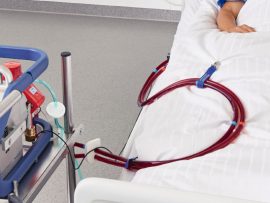
Abstract Extracorporeal life support (ECLS) for severe respiratory failure has seen an exponential growth in recent years. Extracorporeal membrane oxygenation (ECMO) and extracorporeal CO2 removal (ECCO2R) represent two modalities that can..
Read More
Abstract Although de‐airing procedures are commonly performed during cardiac surgery, use of these procedures is not necessarily based on evidence. Uncertainly remains around the size of bubbles that can be..
Read More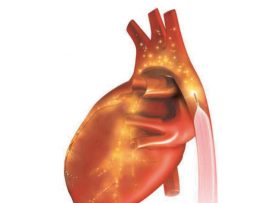
Abstract Introduction The role of intra-aortic balloon pumps (IABP) in high-risk patients undergoing (CABG) surgery remains controversial. We report the 5-year experience from a new Australian centre. Methods We retrospectively analysed..
Read More
Antecedent ACE-inhibition, inflammatory response, and cardiac surgery associated acute kidney injury
Abstract Cardiopulmonary bypass (CPB) may trigger organs damage, including kidney injury, due to a massive cytokine release. In this observational, prospective study, we analyzed the possible impact of chronic treatment..
Read More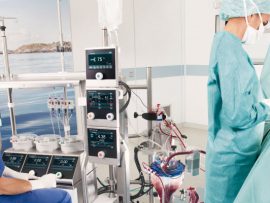
Abstract Background Acute Kidney Injury (AKI) adversely affects outcomes after cardiac surgery. A major mediator of AKI is the activation of leukocytes through exposure to the cardiopulmonary bypass circuit. We..
Read More
Abstract Despite advances in medical technology, the mortality rate for severe acute respiratory distress syndrome (ARDS) remains high at around 40% []. In recent years, multiple studies, systematic reviews, and..
Read More