


Abstract Purpose Describe the experience of one institution in modifying allogeneic blood transfusion protocols for AIS surgery in response to the results of ACS-NSQIP-PEDS comparative data in a retrospective cohort..
Read More
Abstract Veno-arterial extracorporeal membrane oxygenation (VA-ECMO) supports patients suffering from refractory cardiogenic shock. Thromboembolic complications (TeC) are common in VA-ECMO patients and are associated with increased morbidity and mortality. Valid..
Read More
Abstract Combined resection of the superior vena cava is sometimes challenging during radical surgery for malignant mediastinal tumors. We report a case of a 21-year-old man with a malignant mediastinal germ cell tumor who underwent..
Read More
Abstract Background Orthotopic liver transplantation (OLT) is the treatment option for early-stage hepatocellular carcinoma (HCC). OLT is often associated with high blood loss, requiring blood transfusion. Retransfusion of autologous blood is a..
Read More
Abstract During cardiopulmonary bypass (CPB), high flows can allow an adequate perfusion to kidneys, but, on the other hand, they could cause emboli production, increased vascular pressure, and a more..
Read More
Abstract Background: Ceftaroline fosamil, a 5th generation cephalosporin antibiotic with activity against MRSA, is currently approved for the treatment of pneumonia and complicated skin and soft tissue infections. However,..
Read More
Abstract The topsy-turvy heart is a very rare cardiac malformation that involves a global 90° clockwise rotation of the heart along its long axis. This rotation results in the displacement..
Read More
Abstract The coronavirus disease 2019 (COVID-19) pandemic has increased the number of patients who require extracorporeal membrane oxygenation (ECMO). To manage the demand for ECMO, Japan ECMOnet for COVID-19 was..
Read More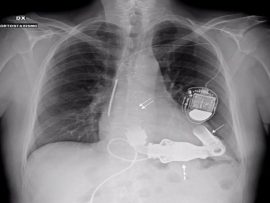
Abstract La ecocardiografía es una herramienta fundamental en el cuidado de los pacientes con dispositivos de asistencia ventricular. La obstrucción dinámica de la cánula de entrada por succión de la..
Read More
Abstract There is sufficient evidence to show that prone positioning improves oxygenation and respiratory mechanics and is also associated with lower mortality in patients with moderate to severe ARDS. However,..
Read More
Abstract Resumen: La monitorización de la saturación de oxígeno en sangre venosa mixta, ayuda a conocer el estado de transporte y consumo de oxígeno en situaciones de shock, mejorando la..
Read More
Abstract Background The usefulness of right heart catherization (RHC) has long been debated, and thus, we aimed to study the real‐world impact of the use of RHC in cardiogenic shock...
Read More
Abstract Background (NO) is an important signalling molecule in the cardiovascular system with protective properties in ischaemia–reperfusion injury. Inorganic nitrate, an oxidation product of endogenous NO production and a constituent..
Read More
Abstract Venoarterial extracorporeal membrane oxygenation (ECMO) is used in cardiogenic shock refractory to inotropic support and intra-aortic balloon pump (IABP) support. Peripheral ECMO can lead to ventricular distention, and IABP..
Read More
Nine Lessons Learned From the COVID-19 Pandemic for Improving Hospital Care and Health Care Delivery
Abstract New York City (NYC) was the epicenter of the COVID-19 pandemic in the US in March 2020. A dense city of only 302 square miles, it has had 33 359..
Read More
Abstract Background There is a known association between need for transfusion and short-term outcomes in patients undergoing cardiac surgery. However long-term data are lacking in the contemporary literature. Methods All..
Read More
Abstract Background Heparin-induced thrombocytopenia (HIT) is an immune-mediated reaction to heparin that provokes a prothrombotic state and causes a decline in platelet count. Data describing outcomes of HIT after cardiac..
Read More
Abstract Primary intestinal lymphangiectasia (PIL) is a rare disorder characterized by dilated intestinal lacteals that result in leakage of excessive serum proteins and lymphocytes into the gastrointestinal (GI) tract culminating..
Read More
Abstract Purpose: Complications associated with use of dual-lumen venovenous extracorporeal membrane oxygenation (VV-ECMO) cannulas are of concern in pediatric patients. While the risk of atrial perforation is believed to be..
Read More
Abstract Background: Myocardial preconditioning using volatile anesthetics such as isoflurane and sevoflurane have beneficial effects in decreasing morbidity in cardiac surgical patients. Studies in animal models have indicated that reactive oxygen..
Read More
Abstract Introduction: The Crescent® is a recently introduced dual lumen cannula by which veno-venous extracorporeal membrane oxygenation (VV ECMO) is delivered. It has a number of features that enhance its ease..
Read More
Abstract OBJECTIVES To determine the recommended concentrations of cefazolin to be used for antibiotic prophylaxis during paediatric cardiac surgery with extracorporeal circulation (ECC). METHODS Twenty paediatric patients undergoing cardiac surgery..
Read More
Abstract Background: The purpose of the present systematic review was to evaluate the incidence, risk factors, and outcome of hyperbilirubinemia after cardiac surgery. Methods: The Population, Interventions, Comparators, Outcomes, and Study design..
Read More
Abstract Introduction Novel biomarkers of acute kidney injury (AKI) are being developed and commercialized. However, none are universally available. The aim of this preliminary prospective observational study was to explore the..
Read More
Abstract Objective. Recent studies have shown that the red cell distribution width- (RDW-) to-platelet (PLT) count ratio (i.e., RPR) and the mean platelet volume (MPV)/PLT ratio (i.e. MPR) are more..
Read More
Abstract Introduction Cytokine storm and endotoxin release during cardiac surgery with cardiopulmonary bypass (CPB) have been related to vasoplegic shock and organ dysfunction. We hypothesised that early (during CPB) cytokine adsorption..
Read More
Objectives Blood-processing techniques and preservation conditions cause storage lesions, possibly leading to adverse outcomes after transfusion. The authors investigated the metabolic changes and deformability of red blood cells (RBCs) during..
Read More
Abstract 71.759 surgical procedures were performed in 2019 with the aid of cardiopulmonary bypass in Germany. To adjust the patient’s body temperature on extracorporeal circulation, the application of a heater-cooler..
Read More
Abstract Objectives: To describe blood component usage in transfused children with congenital heart disease undergoing cardiopulmonary bypass surgery across perioperative settings and diagnostic categories. Design: Datasets from U.S. hospitals participating..
Read More
Abstract Background: Cannulation strategy in surgery for acute type A aortic dissection (ATAAD) remains controversial. We aimed to retrospectively analyze the safety and efficacy of double arterial cannulation (DAC) compared with..
Read More