


Abstract Background: The use of extracorporeal membrane oxygenation (ECMO) in coronavirus disease 2019 (COVID-19) for refractory respiratory failure, severe cardiac dysfunction, and bridge to lung transplantation has been steadily increasing..
Read More
Abstract Background Circulating soluble urokinase plasminogen activator receptor (suPAR) is a marker of inflammation with prognostic value for elevated risk of morbidity and mortality. It has not yet been shown..
Read More
Abstract Objective Postoperative pulmonary complications (PPCs) are common incidents associated with an increased hospital stay, readmissions into the intensive care unit (ICU), increased costs, and mortality after cardiac surgery. Our..
Read More
Abstract Accidental hypothermia (AH) in Mediterranean countries often is underestimated. AH should be suspected in patients also in moderate climates throughout all seasons. Compared with other countries, the mortality rate..
Read More
Abstract BACKGROUND: Bleeding is one of the commonest complications affecting children undergoing cardiac surgery on cardiopulmonary bypass. Antifibrinolytic drugs are part of a multifaceted approach aimed at reducing bleeding, though..
Read More
Abstract An equilibrium model was developed to understand interrelated, physicochemical mechanisms leading to blood pH and electrolyte distribution changes in patients because of venovenous extracorporeal membrane oxygenation (ECMO) and carbon..
Read More
Abstract Purpose To develop evidence-based clinical practice recommendations regarding transfusion practices and transfusion in bleeding critically ill adults. Methods A taskforce involving 15 international experts and 2 methodologists used the..
Read More
Abstract Congratulations to the authors. Uchida and colleagues show that in the setting of acute type A aortic dissection mortality for both a limited strategy of replacing the ascending aorta..
Read More
Abstract Background: To assess the impact of diagnostic procedures in identifying residual lesions during extracorporeal membrane oxygenation (ECMO) on survival after pediatric cardiac surgery. Methods: Between January 2012 and December..
Read More
Abstract The risk for left ventricular (LV) suction while maintaining adequate perfusion over a range of physiologic conditions during continuous flow LV assist device (LVAD) support is a significant clinical..
Read More
Abstract The aim of the study was to test the use of gaseous nitric oxide added to the extracorporeal membrane oxygenation (ECMO) system for treating critical acute heart failure after..
Read More
Abstract Background and objectives AKI is a common complication after pediatric cardiac surgery and has been associated with higher morbidity and mortality. We aimed to compare the efficacy of available pharmacologic..
Read More
Abstract Mechanical blood-immersed bearings have been used in many continuous-flow rotary blood pumps to reduce friction between relatively moving parts, but their use has been associated with a significant incidence..
Read More
Abstract Computational fluid dynamics find widespread application in the development of rotary blood pumps (RBPs). Yet, corresponding simulations rely on shear stress computations that are afflicted with limited resolution while..
Read More
Abstract Background: The aim of this study is to compare the efficacy of the microplegia solution and Del Nido cardioplegia solution in coronary artery bypass surgery with clinical, biochemical, and..
Read More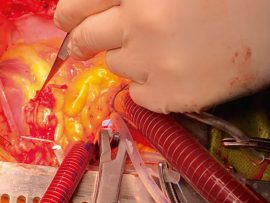
Abstract Background In cardiac surgery, the extent of systemic inflammatory response is closely Mobile associated with patient’s outcome. A systemic inflammatory response syndrome (SIRS) may develop after operations using cardiopulmonary..
Read More
Abstract Objective To perform an untargeted data-driven analysis on the correlates and outcomes of (CABG). Design FinnGen . Setting The authors collected information on up to 1,327 disease traits before and after..
Read More
Abstract Background: Crystalloid cardioplegic solutions are believed to reduce hemoglobin significantly and increase the transfusion rate. However, recent reports indicate that the del Nido cardioplegia may preserve blood morphology parameters...
Read More
Abstract An 11-year-old female patient was admitted to a pediatric intensive care unit for the treatment of acute respiratory distress syndrome (ARDS). She had received peripheral blood stem cell transplantation..
Read More
Abstract Objectives The monitoring of cerebral tissue oxygen saturation by near-infrared spectroscopy (ScerebO2) is used widely in pediatric cardiac anesthesia. However, little information is available on the effects of changes..
Read More
Abstract Background Single-center studies suggest that implementation of multidisciplinary (CS) teams is associated with improved CS survival. Objectives The aim was to characterize practice patterns and outcomes in the management of..
Read More
Abstract To analyze the risk factors for intracranial hemorrhage (ICH) in congenital heart disease (CHD) patients supported with venoarterial extracorporeal membrane oxygenation (VA-ECMO). We performed a retrospective analysis of VA ECMO patients..
Read More
Abstract Coronary artery bypass grafting (CABG) surgery with two methods (on-pump or off-pump) can be used to rescue individuals with severe coronary artery disease (CAD). Each method might cause an..
Read More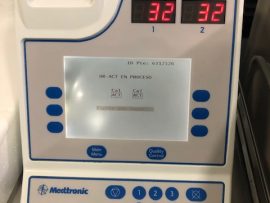
Abstract Introduction: The Activated Clotting Time (ACT) is commonly used to manage anticoagulation during cardiac surgery. The aim of this study was to compare the older manually operated Hemochron® Response and..
Read More
Abstract Background: Early identification of patients at risk for cardiac surgery-associated acute kidney injury (CS-AKI) based on novel biomarkers and tissue oxygen saturation might enable intervention to reduce kidney injury...
Read More
Abstract Background Open heart surgery during pregnancy is relatively rare at home and abroad, and there is a higher risk and probability of maternal and infant death. How to carry..
Read More
Abstract Objectives: The study investigated the impact of prone positioning during venovenous extracorporeal membrane oxygenation support for coronavirus disease 2019 acute respiratory failure on the patient outcome. Design: An observational..
Read More
Abstract Background: In this study, we aimed to investigate the effect of using autologous blood recovery systems on transfusion-related complications in patients undergoing lung transplantation and cardiovascular surgeries. Methods: Between May 2016..
Read More
Abstract Perioperative autologous cell salvage (PACS) is one of the effective strategies in patient blood management (PBM). However, mistransfusion, in which the wrong blood is transfused to the wrong patient,..
Read More
Abstract Viscoelastic hemostatic assays (VHA) are point of care tests that allow for a global assessment of coagulation using whole blood. The technology to allow this assessment has evolved from..
Read More