


Abstract Postinfarct ventricular septal defect (PIVSD) is associated with high mortality and the management of these patients has been a challenge with little improvement in outcomes. We commenced a protocol..
Read More
Abstract Objective: Adenosine pretreatment reduces injury caused by ischemia-reperfusion. To investigate the hypothesis that adenosine pretreatment would modulate injury induced by cardiopulmonary bypass (CPB) and myocardial ischemia/reperfusion, we conducted a randomized..
Read More
Abstract Background: Adults with transposition of the great arteries (d-TGA) after the arterial switch operation (ASO) are an evolving cohort in adult cardiology. We aimed to analyze cardiac function and cardiac..
Read More
Abstract Background Over the last decade, preoperative anemia has become recognized as a clinical condition in need of management. Although the etiology of preoperative anemia can be multifactorial, two thirds..
Read More
Abstract Background Postoperative cognitive decline following cardiac surgery is one of the frequently reported complications affecting postoperative outcome, characterized by impairment of memory or concentration. The aetiology is considered multifactorial..
Read More
Abstract Introduction: Evidence suggests the high capability of non-invasive assessment of the End-tidal carbondioxide (ETCO2) in predicting changes in arterial carbon dioxide pressure (PCO2) following major surgeries in children. We aimed..
Read More
Abstract Cerebrovascular control is carried out by multiple nonlinear mechanisms imposing a certain degree of coupling between mean arterial pressure (MAP) and mean cerebral blood flow (MCBF). We explored the..
Read More
Abstract OBJECTIVES The pathophysiology of delirium after cardiac surgery is complex. The present study aims to determine perioperative risk factors and construct a scoring system for postoperative delirium based..
Read More
Abstract Objectives Cardiac injury has been reported in up to 20%-to-30% of patients with COVID-19, and severe disease can lead to cardiopulmonary failure. The role of mechanical circulatory support in..
Read More
Abstract Background: Clot formation on foreign surfaces of extracorporeal membrane oxygenation systems is a frequent event. Herein, we show an approach that mimics the enzymatic process of endogenous nitric oxide..
Read More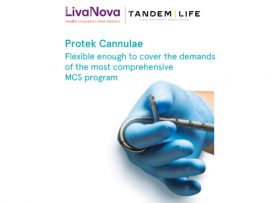
Abstract Recently, a percutaneous right ventricular assist device (RVAD) called the TandemLife Protek Duo (TPD; TandemLife, Pittsburgh, PA) has been introduced. The Protek Duo (TPD) is a temporary RVAD placed via the right..
Read More
Abstract Artificial intelligence (AI) is poised to broadly reshape medicine, potentially improving the experiences of both clinicians and patients. We discuss key findings from a 2-year weekly effort to track..
Read More
Abstract Adipose tissue can more than double in mass and then return to baseline. This review discusses the functional roles of human white and brown adipose tissue and its excess..
Read More
Abstract Veno-venous extracorporeal membrane oxygenation (VV ECMO) has been used as a life-supporting modality for patients with severe respiratory failure because of coronavirus disease 2019 (COVID-19). We aim to evaluate..
Read More
Abstract Objectives: Cardiac surgery with cardiopulmonary bypass and cardioplegic arrest is an effective treatment for coronary artery and aortic valve diseases. However, the myocardium sustains reperfusion injury after ischemic cardioplegic arrest...
Read More
Abstract Context: Postoperative hyperthermia, which may lead to cognitive decline, is a common complication of cardiovascular surgery with cardiopulmonary bypass (CPB). Aims: The aim of this study was to examine the effectiveness..
Read More
Abstract Importance Handovers of anesthesia care from one anesthesiologist to another is an important intraoperative event. Despite its association with adverse events after noncardiac surgery, its impact in the context of..
Read More
Abstract We have read with interest the report of ELSO-registry data published by Nunez and coworkers in Intensive Care Medicine analyzing risk factors for bleeding and thrombotic events (BTE) on..
Read More
Abstract Background Severe acute respiratory syndrome coronavirus 2 (SARS-Cov-2)-induced infection, the cause of coronavirus disease 2019 (COVID-19), is characterized by acute clinical pathologies, including various coagulopathies that may be accompanied..
Read More
Abstract Purpose. Obesity has been associated with an increased risk of respiratory complications and other systemic illnesses. Respiratory dynamics in an obese patient, combined with modified lung physiology of ARDS,..
Read More
Abstract Extracorporeal carbon dioxide removal (ECCO2R) has gained widespread use as a supposedly less invasive alternative for hypercapnic respiratory failure besides venovenous extracorporeal membrane oxygenation (VV ECMO). Despite technological advances,..
Read More
Abstract Early right heart failure (RHF) occurs in up to 40% of patients following left ventricular assist device (LVAD) implantation and is associated with increased morbidity and mortality. The most recent..
Read More
Abstract Initial reports described a hypercoagulable state and an increased risk of thrombosis in patients who tested positive for SARS-CoV-2. Infected patients with severe acute respiratory distress syndrome in the setting of..
Read More
Abstract Introduction Minimally invasive cardiac surgery has been evolving, with the intention of reducing surgical trauma, improve cosmesis and patient satisfaction. Single dose, crystalloid cardioplegia such as Del Nido cardioplegia..
Read More
Abstract Nearly 90% of COVID-19 patients who qualified for, but did not receive, ECMO (extracorporeal membrane oxygenation) due to a shortage of resources during the height of the pandemic died..
Read More
Abstract Purpose Extracorporeal membrane oxygenation (ECMO) has become an established therapy for severe respiratory failure in coronavirus disease 2019 (COVID-19). The added benefit of receiving ECMO in COVID-19 remains uncertain...
Read More
Abstract Importance Ischemic cold storage (ICS) of livers for transplant is associated with serious posttransplant complications and underuse of liver allografts. Objective To determine whether portable normothermic machine perfusion preservation of livers..
Read More
Abstract Objectives:To determine the optimal antithrombotic agent choice, timing of initiation, dosing and duration of therapy for paediatric patients undergoing cardiac surgery with cardiopulmonary bypass. Methods:We used PubMed and EMBASE..
Read More
Abstract Background: Little data is published describing the use of medications prescribed for pulmonary arterial hypertension (PAH) in patients receiving extracorporeal membrane oxygenation (ECMO). Even though many patients with PAH..
Read More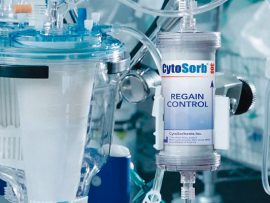
Abstract Patients operated for infective endocarditis (IE) are at high risk of developing an excessive systemic hyperinflammatory state, resulting in systemic inflammatory response syndrome and septic shock. Hemoadsorption (HA) by..
Read More