


Abstract Surgical pulmonary embolectomy is a procedure that is often used to rescue patients with massive pulmonary embolism (PE) and circulatory collapse that have failed or may not be ideal..
Read More
Abstract Objectives: Extracorporeal membrane oxygenation (ECMO) has been used successfully to support adults with severe acute respiratory syndrome coronavirus 2 (SARS-CoV-2)-related cardiac or respiratory failure refractory to conventional therapies. Comprehensive..
Read More
Abstract Objective is a common after cardiac surgery with (CPB). This study evaluated postoperative cognitive function to determine predictors of cognitive dysfunction, including intraoperative cerebral regional tissue (rSO2). Design A prospective observational . Setting..
Read More
Abstract Background Despite quick implementation of reperfusion therapies, a few patients with high-risk, acute, massive, pulmonary embolism (PE) remain highly hemodynamically unstable. Others have absolute contraindication to receive reperfusion therapies...
Read More
Abstract Introduction The risk, cost, and adverse outcomes associated with packed red blood cell (RBC) transfusions in patients with cardiopulmonary failure requiring extracorporeal membrane oxygenation (ECMO) have raised concerns regarding..
Read More
Abstract Mechanical circulatory support may help patients with massive pulmonary embolism who are not candidates for systemic thrombolysis, pulmonary embolectomy, or catheter-directed therapy, or in whom these established interventions have..
Read More
Abstract Objectives In our center, an unusual rate of patients had abnormalities of hemostasis in immediate postoperative period of cardiac surgery. Our objectives were to identify the cause of these..
Read More
Abstract Refractory cardiogenic shock is increasingly being treated with veno-arterial extracorporeal membrane oxygenation (V-A ECMO), without definitive proof of improved clinical outcomes. Recently, pulsatile V-A ECMO has been developed to address some of the..
Read More
Abstract The authors discuss the mechanisms, clinical presentation, and evaluation of right ventricular failure, as well as its management.
Read More
Abstract Background There are limited practical advanced life support algorithms to aid teams in the management of cardiac arrest in patients on extracorporeal membrane oxygenation (ECMO). Methods In our specialist..
Read More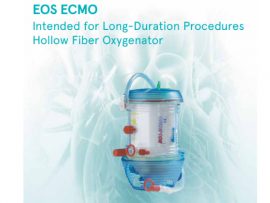
Abstract Severe acute respiratory distress syndrome (ARDS) confers significant in-hospital mortality despite implementation of evidence-based ventilatory strategies. Acute right ventricular (RV) injury characterized by abnormal RV and pulmonary vascular biomechanics is..
Read More
Abstract Background The management of the oxygenator can be prolonged in the long-term procedures especially during extracorporeal membrane oxygenation (ECMO) for bridge to transplant or bridge to recovery. Long-term use..
Read More
Abstract The use of extracorporeal membrane oxygenation (ECMO) circuit obligates the administration of systemic anticoagulation to avoid patient and circuit thrombosis. Identifying an optimal approach for achievement of target pharmacologic..
Read More
Abstract Background The preferred configuration for bridging patients with respiratory failure while awaiting is venovenous (VV ECMO). However, the protective effect of VV ECMO on the lung, as well as the underlying..
Read More
Introduction The startling revelation that one fifth of health expenditure makes little contribution to good health outcomes is surely a call to action to tackle waste in the delivery of care...
Read More
Abstract An increasing number of patients on systemic present for cardiac surgery, and cardiac anesthesiologists should be well-informed on their management in the . (DOACs), including and , are an attractive alternative to warfarin due..
Read More
Abstract Sepsis and Tachycardia – Aetiologic Factors During sepsis, the sympathetic nervous system plays a key role in maintaining cardiac output and blood pressure. This is achieved through changes in..
Read More
Abstract The use of agitated saline contrast (ASC) during echocardiographic examinations is a well-established practice, most commonly performed to identify atrial septal abnormalities in the context of stroke. In the..
Read More
Abstract Veno-venous extracorporeal membrane oxygenation (V–V ECMO) has an established evidence base in acute respiratory distress syndrome (ARDS) and has seen exponential growth in its use over the past decades...
Read More
Abstract Metabolism management plays an essential role in extracorporeal technologies. There are different metabolic management devices integrated to extracorporeal devices; the most commonly used and accepted metabolic target in adult..
Read More
Abstract Healthcare providers are expected to communicate, coordinate and collaborate with people both within and outside their formal team on a regular basis, often with individuals from different professions, specialties..
Read More
Abstract Objectives Attempts to understand patient safety using administrative data in Korea have been rare. This study develops a Korean patient safety incident code classification system and identifies its characteristics..
Read More
Abstract Previous studies have shown that the endoaortic balloon occlusion (EABO) can provide satisfactory aortic cross-clamping with comparable surgical outcomes to thoracic aortic clamping in the setting of minimally invasive..
Read More
Abstract Introduction Critical incident reporting systems (CIRS) are in use worldwide. They are designed to improve patient care by detecting and analyzing critical and adverse patient events and by taking..
Read More
Abstract Background Debriefings help teams learn quickly and treat patients safely. However, many clinicians and educators report to struggle with leading debriefings. Little empirical knowledge on optimal debriefing processes is available...
Read More
Abstract Objectives Medical care in low-income countries is often limited by inadequate resources, treatment facilities, and the necessary infrastructure for healthcare delivery. We hypothesized that the development of an independently..
Read More
Abstract Background: Tackling operating theatre waiting lists may focus healthcare organisations’ attention on increased productivity while downplaying safety concerns. Aim: To explore safety culture in a perioperative department from operating..
Read More
Abstract Acute kidney injury (AKI) is a common and serious complication of cardiac surgery and is associated with increased mortality and morbidity, accompanied by a substantial economic burden. The pathogenesis..
Read More
Abstract Fluid overload is common among pediatric cardiac patients receiving extracorporeal membrane oxygenation (ECMO) and is often treated with in-line ultrafiltration (UF) or continuous renal replacement therapy (CRRT). We assessed whether..
Read More
Abstract A countrywide study over the eras indicates overuse of blood transfusion can have considerable risks to patients accompanied by significant costs of blood transfusion for patients, hospitals, and health-care..
Read More