


Abstract Objective To compare mortality trends in patients requiring Extracorporeal Membrane Oxygenation (ECMO) support between the first quarters of 2019 and 2020 and determine whether these trends might have predicted..
Read More
Abstract Ensuring organisations learn from patient safety incidents is a key aim for healthcare organisations. The role that human factors and systems thinking can have to enable organisations learn from..
Read More
Abstract Severe acute hypercapnia is independently associated with increased adverse effects and intensive care unit mortality in mechanically ventilated patients. During the severe acute respiratory syndrome coronavirus 2 (COVID-19) pandemic,..
Read More
Abstract Extracorporeal membrane oxygenation (ECMO) has had increasing prevalence and indications in the last decade. Calcium channel blocker overdose (CCBOD) can lead to significant cardiopulmonary dysfunction and has also increased..
Read More
Abstract The 2 hypnotic agents currently used for the maintenance of general anesthesia during cardiopulmonary bypass (CPB) are propofol and sevoflurane. Propofol can be administered directly into the cardiotome of..
Read More
Abstract Introduction Cardiac surgery in patients on chronic renal dialysis is associated with significant morbidity and mortality. Minimally invasive extracorporeal circuits (MiECC) have shown a positive impact on patient outcome..
Read More
Abstract BACKGROUND: Renal ischemia and reperfusion (IR) contribute to perioperative acute kidney injury, and oxygen is a key regulator of this process. We hypothesized that oxygen administration during surgery and..
Read More
Abstract Background Impairment of cerebral autoregulation (CA) has been observed in patients undergoing cardiopulmonary bypass (CPB), but little is known about its risks and associations with outcomes. The cerebral oximetry..
Read More
Abstract Background Few studies have considered outcomes among low body mass index (BMI) cohorts undergoing coronary artery bypass grafting (CABG). This study aims to investigate the effects of low body..
Read More
Abstract Objective Perioperative corticosteroids have been used for cardiac surgery for decades, but the underlying evidence is conflicting. We aimed to investigate the efficacy and safety of perioperative prophylactic corticosteroids in heart..
Read More
Abstract Objective after cardiac surgery increases morbidity and mortality. Diagnosis relies on or increased serum creatinine, which develop 48 to 72 hours after injury. We hypothesized machine learning incorporating preoperative, operative, and data..
Read More
Abstract Improving the safety of patient care is a top priority in the perioperative environment in order to minimize preventable deaths, post-surgical complications, and preventable adverse events. Improved protocols..
Read More
Abstract Cardiac surgery, including surgical aortic valve repair (SAVR) and coronary artery bypass grafting (CABG), are associated with ischemia-reperfusion (I/R) injury. Single bouts of exercise, including handgrip exercise, may protect..
Read More
Abstract Background and Objective The use of extracorporeal membrane oxygenation (ECMO) as a cardiocirculatory or respiratory support has tremendously increased in critically ill patients. In the setting of ECMO support,..
Read More
Abstract Methemoglobinemia is a rare blood disorder that can have severe consequences if not promptly diagnosed and treated. In this article, we will explore a real-life case study of a..
Read More
Abstract Rationale Severe cases of acute respiratory distress syndrome (ARDS) may require prolonged (>28 days) extracorporeal membrane oxygenation (ECMO). In non-resolving disease, recovery is uncertain and lung transplant may be..
Read More
Abstract Objectives Colloids are added to the priming solution of the cardiopulmonary bypass (CPB) pump to maintain colloid osmotic pressure and prevent fluid overload. This study aimed to compare the..
Read More
Abstract Cardiogenic shock is a complex and diverse pathological condition characterized by reduced myocardial contractility. The goal of treatment of cardiogenic shock is to improve abnormal hemodynamics and maintain adequate..
Read More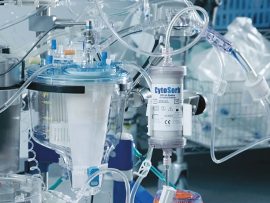
Abstract Introduction: Cardiopulmonary bypass (CPB) is a vital component of many cardiac surgeries, but it can trigger systemic inflammatory responses, leading to post-operative complications. The CytoSorb filter, a cytokine adsorber, has..
Read More
Abstract Background After pediatric cardiosurgical interventions, postoperative delirium can occur, which can be associated with undesirable consequences during and after the hospital stay. It is therefore important to avoid any..
Read More
Abstract Objectives To study the quantitative potency of plasma albumin on cardioprotection in terms of creatinine kinase-myocardial band mass (CK-MBm) in on-pump cardiac surgery. Design Post hoc analysis of a..
Read More
Abstract The term “cold agglutinin (CA)” refers to a group of disorders caused by anti-erythrocyte autoantibodies that preferentially bind RBCs at cold temperatures (4°C–18°C). CAs contribute to 10 to 15%..
Read More
Abstract Background Heparin rebound is a common observed phenomenon after cardiac surgery with CPB and is associated with increased postoperative blood loss. However, the administration of extra protamine may lead..
Read More
Abstract This case report describes a prehospital extracorporeal cardiopulmonary resuscitation (ECPR) in a female patient who suffered a sudden cardiac arrest while shopping in a supermarket. The success of this..
Read More
Abstract Patient blood management is a patient-centered evidence-based approach to improve patient outcomes by harnessing the patient's own hematopoietic system to optimize blood health while promoting patient safety and empowerment...
Read More
Abstract Background Patients with valvular heart disease require and cardiac arrest. Here, we test the hypothesis that exosomal hemoglobin formed during mediates acute cardiac injury in humans and in an animal model..
Read More
Abstract Although surgical techniques and perioperative care have made significant advances, perioperative mortality in cardiac surgery remains relatively high. Single- or multiple-organ failure remains the leading cause of postoperative mortality...
Read More
Abstract Introduction In children with myocarditis or dilated cardiomyopathy (DCM) on extracorporeal membrane oxygenation (ECMO) for cardiogenic shock, it is often necessary to decompress the left heart to minimize distension..
Read More
Abstract Acute kidney injury (AKI) is a common complication in cardiac surgery patients, with a reported incidence of 20 to 30%. The development of AKI is associated with worse short-..
Read More
OBJECTIVES Cardiopulmonary bypass (CPB) management may potentially play a role in the development of new-onset atrial fibrillation (AF) after cardiac surgery. The aim of this study was to explore this..
Read More