
Discover our section specialized in congenital heart disease pathologies, where you can find more than 200 pathologies.
Collaboration with Prof. Daniel Tobler and University of Basel


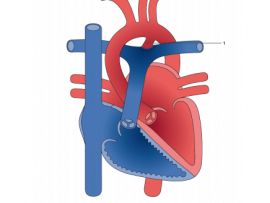
The ductus arteriosus is a normal fetal artery connecting the main body artery (aorta) and the main lung artery (pulmonary artery). The ductus allows blood to detour away from the lungs before birth. Every baby is born with a ductus arteriosus. After birth, the opening is no longer needed and..
Read More
Cor Triatriatum Sinister is a rare congenital abnormality, usually diagnosed in childhood; few cases remain asymptomatic and are diagnosed in adulthood. In this review article we focus on classification and etiologies, clinical manifestations, novel diagnostic modalities and treatment of Cor triatriatum Sinister.
Read More
Cor Triatriatum Sinister is a rare congenital abnormality, usually diagnosed in childhood; few cases remain asymptomatic and are diagnosed in adulthood. In this review article we focus on classification and etiologies, clinical manifestations, novel diagnostic modalities and treatment of Cor triatriatum Sinister.
Read More
Cor Triatriatum Sinister is a rare congenital abnormality, usually diagnosed in childhood; few cases remain asymptomatic and are diagnosed in adulthood. In this review article we focus on classification and etiologies, clinical manifestations, novel diagnostic modalities and treatment of Cor triatriatum Sinister.
Read More
[gallery ids="15187,15193,15190"] Atrioventricular (AV) septal defect consists of an ostium primum type atrial septal defect and a common AV valve, with or without an associated inlet (AV septal type) ventricular septal defect (VSD). These defects result from maldevelopment of the endocardial cushions. Patients with no VSD component or a small..
Read More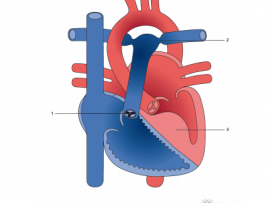
Most people with Noonan syndrome have some form of critical congenital heart disease. The most common heart defect in these individuals is a narrowing of the valve that controls blood flow from the heart to the lungs (pulmonary valve stenosis). Some have hypertrophic cardiomyopathy, which enlarges and weakens the heart muscle. A..
Read More
Mitral valve prolapse, also called MVP, is a condition in which the two valve flaps of the mitral valve don't close smoothly or evenly, but bulge (prolapse) upward into the left atrium. Mitral valve prolapse is also known as click-murmur syndrome, Barlow's syndrome or floppy valve syndrome.
Read More
Although the first-stage Norwood procedure mostly has been used for hypoplastic left heart syndrome, there are other anomalies in which the Norwood procedure can be applied. Since 1991, 18 newborns without hypoplastic left heart syndrome underwent a first-stage Norwood procedure. All had a hypoplastic aortic annulus, ascending aorta, and transverse..
Read More
Mitral atresia is a rare congenital heart defect. This rarity has been reported when compared to atresia of other valves.[] Embryologically, this defect has been attributed to a malaligned ventricular and or atrial septum,[] defect of the atrioventricular canal[] as well as the excessive growth of the endocardial cushion.[] This..
Read More