
Collaboration with Prof. Daniel Tobler and University of Basel
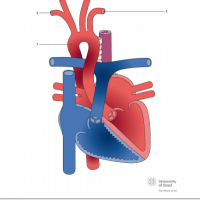
Right aortic arch anomalies occur in approximately 0.01 to 0.1 percent of the general population. In general, these anomalies do not directly cause any cardiovascular problems. However, in some patients, right aortic arches can be associated with other congenital heart defects, vascular rings, and chromosomal abnormalities such as DiGeorge syndrome...
0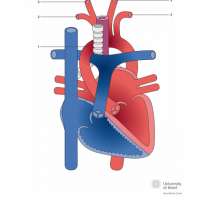
Right aortic arch is an uncommon anatomic anomaly, which occurs in approximately 0.05% to 0.1% of the population. “Mirror-image” right aortic arch is by itself generally asymptomatic, but it is usually associated with cyanotic congenital heart disease. In the event that a mirror-image right aortic arch is associated with a retroesophageal left..
0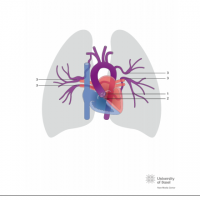
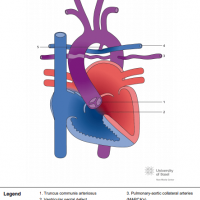
The surgical management of pulmonary atresia with ventricular septal defect (VSD), extreme hypoplasia of the pulmonary arteries (PA), major aorto–pulmonary collaterals (MAPCAS) represents a major challenge. Two main basic concepts have been used in its management. The first is to rely mainly on the MAPCAS, unifocalizing successively the MAPCAS on..
0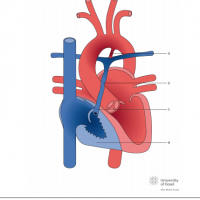
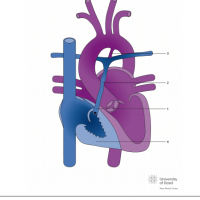
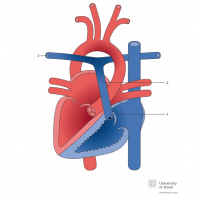
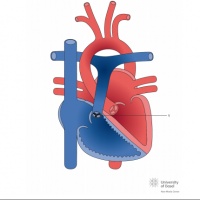
Pulmonary valve stenosis is a condition in which a deformity on or near your pulmonary valve narrows the pulmonary valve opening and slows the blood flow. The pulmonary valve is located between the lower right heart chamber (right ventricle) and the pulmonary arteries.
0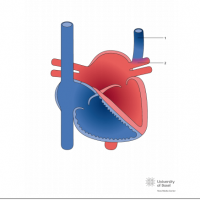
Persistent left superior vena cava (PLSVC) is the most common congenital malformation of thoracic venous return and is present in 0.3 to 0.5% of individuals in the general population. This heart specimen was dissected from a 35-yearold male cadaver whose cause of death was determined as non-cardiac. The heart was..
0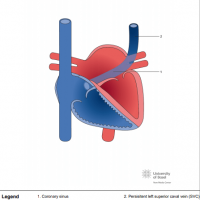
Persistent left superior vena cava (PLSVC) is the most common congenital malformation of thoracic venous return and is present in 0.3 to 0.5% of individuals in the general population. This heart specimen was dissected from a 35-yearold male cadaver whose cause of death was determined as non-cardiac. The heart was..
0