
Collaboration with Prof. Daniel Tobler and University of Basel
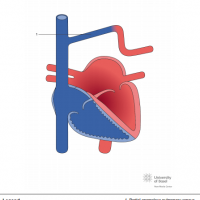
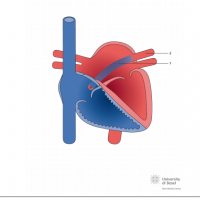
Partial anomalous pulmonary vein connection (PAPVC) is a rare congenital abnormal cardiac defect involving the pulmonary veins draining into the right atrium (RA) directly or indirectly by venous connection. Nowadays, these patients are diagnosed when still in childhood and operated on with excellent results.
0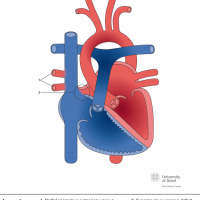
Partial anomalous venous connection (PAPVC) is a rare congenital heart disease where the blood flow from one or more pulmonary veins (but not all) returns to the right atrium or systemic venous circulation and is often associated with a sinus venosus atrial defect (SVD).
0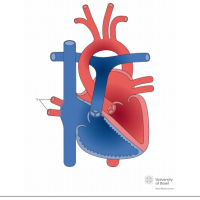
Partial anomalous pulmonary venous connection (PAPVC) is a rare congenital cardiac defect. As the name suggests, in PAPVC, the blood flow from a few of the pulmonary veins return to the right atrium instead of the left atrium. Usually, a single pulmonary vein is anomalous. Rarely, all the veins from..
0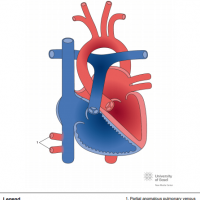
Partial anomalous pulmonary venous connection (PAPVC) is a rare congenital cardiac defect. As the name suggests, in PAPVC, the blood flow from a few of the pulmonary veins return to the right atrium instead of the left atrium. Usually, a single pulmonary vein is anomalous.
0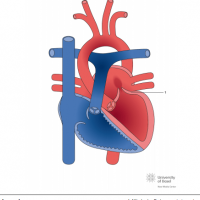
Barlow’s syndrome has become a regular, often-used and very often misused diagnosis. Its description followed extensive, prolonged and detailed clinical observation by JB Barlow and his co-workers. This major research effort was necessary because of the protean manifestations of the condition. The differentiation of Barlow’s syndrome from other conditions with..
0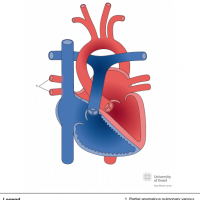
Partial anomalous venous connection (PAPVC) is a rare congenital heart disease where the blood flow from one or more pulmonary veins (but not all) returns to the right atrium or systemic venous circulation and is often associated with a sinus venosus atrial defect (SVD). Transthoracic echocardiography (TTE) can provide limited..
0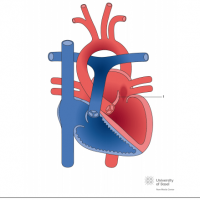
Mitral valve prolapse, also called MVP, is a condition in which the two valve flaps of the mitral valve don't close smoothly or evenly, but bulge (prolapse) upward into the left atrium. Mitral valve prolapse is also known as click-murmur syndrome, Barlow's syndrome or floppy valve syndrome.
0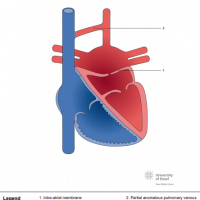

ECMO, El éxito de una terapia MÓDULO II – “ECMO, state of the art” MODERADOR Principal: Dr. Gregorio Rábago MD. Servicio Cirugía Cardiaca C.U.N., Pamplona/Madrid MODERADOR Chat: Dr. José Lopez. Servicio Cirugía Cardiaca Hospital Ramon y Cajal, Madrid PONENTES “Fisiología de un paciente en ECMO: como empezar y como destetar”..
0