


Abstract Introduction and importance Perioperative anesthetic management in cases of severe airway obstruction with positional symptoms can be associated with difficulties in ventilation or intubation, with a risk of acute..
Read More
Abstract Intracardiac air remains an unsolved problem in the realm of cardiac surgery, leading to embolic events encompassing conduction disturbance, heart failure, and stroke. Transesophageal echocardiography allows the visualization of..
Read More
Abstract Objective This study aims to analyze the risk factors for early postoperative brain injury in patients undergoing cardiovascular surgery and explore the predictive value of transcranial color Doppler (TCCD)..
Read More
Abstract Introduction Prevention of acute kidney injury during cardiopulmonary bypass (CPB) is still a challenge and has been the object of numerous studies. The incidence of acute kidney injury in..
Read More
Abstract Target values for arterial carbon dioxide tension (PaCO2) in extracorporeal membrane oxygenation (ECMO) for acute respiratory distress syndrome (ARDS) are unknown. We hypothesized that lower PaCO2 values on ECMO would..
Read More
Abstract Predictive survival models have been proposed to esti-mate survival rates in patients with refractory cardio-genic shock considered for veno-arterial extracorporeal membrane oxygenation (VA-ECMO) [1, 2]. Notably, the Survival after..
Read More
Abstract Over the past decade, extracorporeal life support (ECLS) has gained increasing utilization in the management of refractory cardiogenic shock (CS) with a class IIaC recommendation according to the latest..
Read More
Abstract In critically ill patients with moderate to severe acute respiratory distress syndrome (ARDS) receiving invasive mechanical ventilation, prone positioning for 16 hours/day has been shown to confer significant mortality..
Read More
Abstract The continuous contact between blood and the foreign surface of the extracorporeal membrane oxygenation (ECMO) circuit contributes to hemostatic, inflammatory, and other physiological disturbances observed during ECMO. Although previous..
Read More
Abstract Alagille syndrome is an autosomal dominant disorder that is caused by heterozygous mutation of JAG1 or NOTCH2 gene that impacts several multisystem organs including but may not be limited..
Read More
Abstract Objective To explore the clinical effect of predeposit, salvage, and hemodilution autotransfusion on patients with femoral shaft fracture (FSF) surgery. Methods Selected patients with FSF were randomly divided into..
Read More
Abstract Rationale Acute renal failure (ARF) is one of the most serious complications of cardiopulmonary bypass (CPB) surgery. Serum creatinine level is a key compound examined to understand whether renal..
Read More
Abstract Early cardiac surgery in neonates and infants with congenital heart disease has been performed since the middle to late years of the twentieth century. To date, there are very..
Read More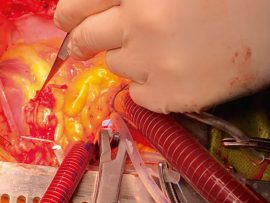
Abstract Background Reports of intravascular thrombosis and cardiac complications have raised concerns about the safety of COVID‐19 vaccinations, particularly in patients with high cardiovascular risk. Herein, we aimed to analyze..
Read More
Abstract During extracorporeal membrane oxygenation (ECMO) support, the high shear stress in the ECMO circuit results in increased proteolysis of von Willebrand Factor (VWF), loss of VWF high molecular weight..
Read More
Abstract Postoperative survival for complete atrioventricular septal defect (cAVSD) is excellent. Common complications of surgery include valvular stenosis/regurgitation, left ventricular outflow tract obstruction, arrythmias, and residual defects. We report a..
Read More
Abstract Introduction Postoperative delirium (POD) has a major impact on patient recovery after cardiac surgery. Although its pathophysiology remains unclear, there could be a correlation between cerebral blood flow (CBF)..
Read More
Abstract Autologous blood transfusion can be achieved through different techniques, including by the patient donating blood before surgery (pre-deposit), collecting blood from the patient immediately before the operation and replacing..
Read More
Abstract Background In this pilot study, we investigated continuous cerebral blood flow velocity measurements to explore cerebrovascular hemodynamics in infants with congenital heart disease undergoing cardiac surgery. Methods A non-invasive..
Read More
Abstract Background Acute microcirculatory perfusion disturbances and organ edema are important factors leading to organ dysfunction during cardiac surgery with cardiopulmonary bypass (CPB). Priming of the CPB system with crystalloid..
Read More
Abstract Objective: To evaluate whether a machine learning algorithm (i.e. the “NightSignal” algorithm) can be used for the detection of postoperative complications prior to symptom onset after cardiothoracic surgery. Summary..
Read More
Abstract Dear Editor, Acute kidney injury (AKI) frequently occurs as a complication in patients undergoing cardiac surgery, with reported incidence rates ranging from 20 to 40% []. The development of..
Read More
Abstract OBJECTIVES: Examine the: 1) relative role of hemodynamic determinants of acute kidney injury (AKI) obtained in the immediate postcardiac surgery setting compared with established risk factors, 2) their predictive..
Read More
Abstract Cardiac surgeries under cardiopulmonary bypass (CPB) are complex procedures with high incidence of complications, morbidity and mortality. The inhaled nitric oxide (iNO) has been frequently used as an important..
Read More
Abstract Background: Near-infrared spectroscopy (NIRS) is a noninvasive tool frequently used during cardiac surgery and postoperatively in the cardiac intensive care unit to monitor regional tissue oxygen saturation. A relationship..
Read More
Abstract Background Oxygenators, as used in cardiopulmonary bypass (CPB) circuits, are components with good air removal properties. However, under some conditions the semipermeable characteristics of hollow fibers allow air to..
Read More
Abstract Introduction The study objective was to investigate whether a Ringer’s acetate based priming solution with addition of Mannitol and sodium concentrate increases the risk of cardiac surgery associated kidney..
Read More
Abstract Background Heparin is used for anticoagulation during cardiopulmonary bypass. After weaning from bypass, protamine is administered to neutralize the effects of heparin and thus reestablish hemostasis. Rotational thrombelastometry has..
Read More
Abstract Objectives Previous studies in other settings suggested that urine output (UO) might affect NephroCheck predictive value. We investigated the correlation between NephroCheck and UO in cardiac surgery patients. Design..
Read More
Abstract Purpose: There is currently no consensus on the most appropriate blood transfusion strategy for older adults undergoing cardiovascular surgery. We aimed to investigate the potential benefits of the patient blood..
Read More