


Abstract Introduction Transport on extracorporeal membrane oxygenation (ECMO) is a risky and complex procedure. Although most published data support the feasibility of interhospital transport on ECMO, data concerning intra-facility transportation..
Read More
Abstract Background Current clinical imaging modalities such as CT and MRI provide resolution adequate to diagnose cardiovascular diseases but cannot depict detailed structural features in the heart across length scales...
Read More
This 2 hour web seminar is designed for healthcare professionals with a strong understanding of hemodynamics who will be directly responsible for the care of patients requiring IABP therapy. The..
Read MoreAbstract In this review, we aimed to comprehensively summarize current literature on pathophysiology, relevance, diagnosis and treatment of fluid accumulation in patients with sepsis/septic shock. Fluid accumulation syndrome (FAS) is..
Read More
Abstract Objective: To characterize surface-bound proteins and to measure the thickness of fibrin fibers bound to extracorporeal membrane oxygenation (ECMO) circuits used in children. Design: Single-center observational prospective study, April..
Read MoreAbstract Background Veno-venous extracorporeal membrane oxygenation (V-V ECMO) is a rapidly expanding life-support technique worldwide. The most common indications are severe hypoxemia and/or hypercapnia, unresponsive to conventional treatments, primarily in..
Read More
Introduction: Picture this: You're standing at the bedside of a critically ill patient in the ICU, their life hanging by a thread as cardiogenic shock takes hold. The monitors are..
Read MoreAbstract Background: Cardiac surgery-associated acute kidney injury (CS-AKI) remains a vexing issue. Clinical trials for the prevention of CS-AKI have been disappointing despite enormous initial enthusiasm based on experimental data. Summary: The..
Read More
Abstract The efficacy and safety of extracorporeal membrane oxygenation (ECMO) support during transcatheter aortic valve replacement (TAVR) remains unknown. We conducted a meta-analysis to compare benefit and risk of ECMO..
Read MoreAbstract Heart–lungs interactions are related to the interplay between the cardiovascular and the respiratory system. They result from the respiratory-induced changes in intrathoracic pressure, which are transmitted to the cardiac..
Read More
Abstract Despite advances in therapy, the incidence of cardiogenic shock continues to increase, with significant mortality that has improved minimally over time. Treatment options for cardiogenic shock are complex and..
Read More
Abstract Neurological complexities resulting from surgery requiring cardiopulmonary bypass (CPB) remain a major concern, encompassing a spectrum of complications including thromboembolic stroke and various cognitive impairments. Surgical manipulation during CPB..
Read More
Our ELSO and ELSO-endorsed courses and workshops are key components in extracorporeal life support (ECLS) and extracorporeal membrane oxygenation (ECMO) education. Many courses and workshops use patient care scenarios, hands-on..
Read MoreThe Texas Heart Institute (THI) School of Perfusion Technology offers a post-baccalaureate certificate in perfusion technology. The school trains students to use the cardiopulmonary bypass machine and other equipment associated..
Read More
Abstract Heart failure (HF) is a frequent and severe condition. It is estimated that one in four patients will die within a year following hospitalization for acute decompensation, with significant..
Read More
Abstract Murray’s law has been viewed as a fundamental law of physiology. Relating blood flow (˙QQ˙) to vessel diameter (D) (˙QQ˙·∝·D3), it dictates minimum lumen area (MLA) targets for coronary..
Read More
Abstract Background Minimally invasive cardiac surgery (MICS) has garnered significant attention for its potential benefits, including decreased surgical trauma, accelerated recovery, and improved aesthetic outcomes. This case series aims to..
Read More
Abstract Low pulse pressure (PP) in venoarterial-extracorporeal membrane oxygenation (VA-ECMO) is a marker of cardiac dysfunction and has been associated with acute brain injury (ABI) as continuous-flow centrifugal pump may..
Read More
Abstract Objective The impact of nitric oxide (NO) administered via cardiopulmonary bypass (CPB) on pediatric heart surgery remains controversial. The objective of this study is to conduct a comprehensive systematic..
Read More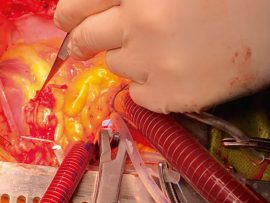
Abstract Background Cardiac arrest after coronary artery bypass grafting (CABG) is a serious complication with low survival rate. The prognosis of patients with cardiac arrest in the general ward is..
Read MoreAbstract While the process of teaching student perfusionists has been in development since the 1950s, the publication of the processes to improve perfusion clinical education has been largely lacking. Publications..
Read More
Abstract Objective: Epidemiologic data on extracorporeal cardiopulmonary resuscitation (ECPR) use in children with cardiac disease after in-hospital cardiac arrest (IHCA) are lacking. We aimed to investigate trends in ECPR use..
Read MoreAbstract Building solid evidence in intensive care medicine is challenging, mostly due to patient heterogeneity and concomitant treatment interactions. In the context of acute respiratory distress syndrome (ARDS), only two..
Read More
Abstract Objective To evaluate the association of RBC transfusions with thrombosis in pediatric patients on extracorporeal membrane oxygenation (ECMO) and compare this with the transfusion of other blood products and..
Read More
Abstract Technologies for monitoring organ function are rapidly advancing, aiding physicians in the care of patients in both operating rooms (ORs) and intensive care units (ICUs). Some of these emerging,..
Read MoreAbstract Introduction Cerebral oxygen desaturation during pediatric surgery has been associated with adverse perioperative outcomes. The aim of this pilot study was to analyze the frequency and severity of intraoperative..
Read More
Abstract The authors of the study ‘Outcome after extracorporeal membrane oxygenation therapy in Norwood patients before the bidirectional Glenn operation’ should be congratulated for their very good results of Norwood..
Read More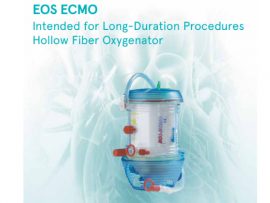
Abstract Venovenous bypass (VVB) is a technique used in liver transplantation (LT) to maintain hemodynamic stability and abdominal organ perfusion and thereby improve patient outcomes. Despite its perceived benefits, VVB..
Read More
Abstract Background: Phosphorylcholine has emerged as a potential adjunctive agent in cardiopulmonary bypass (CPB) circuits. Phosphorylcholine serves as a coating for the CPB circuit, potentially enhancing biocompatibility and reducing..
Read More
Abstract Both over and underdamping of the arterial pressure waveform are frequent during continuous invasive radial pressure monitoring. They may influence systolic blood pressure measurements and the accuracy of cardiac..
Read More