
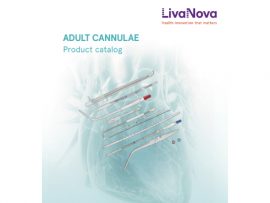

Abstract Objective: Venous drainage is often problematic in minimally invasive cardiac surgery (MICS). Here, we describe our experience with a self-expandable stent cannula designed to optimize venous drainage. Methods: The smart canula® was used..
Read More
Abstract Background Insufflation of carbon dioxide (CO2) into the operative field to prevent cerebral or myocardial damage by air embolism is a well known strategy in open-heart surgery. However, here..
Read More
By Stephanie Louka, MD Case scenario: Paramedics are called to the home of a 59-year-old male patient with an LVAD who was found unconscious and unresponsive by family members. He..
Read More
Abstract Assessment and treatment of a patient with a (VAD) is slightly different than what is expected in any other patient out there. Let’s look at what we need to know..
Read More
Abstract We aimed to evaluate the role of higher mean arterial pressure (MAP) during cardiopulmonary bypass (CPB) in preventing development of acute kidney injury (AKI). Methods. We evaluated a population..
Read More
Abstract Objective In this study, it was aimed to compare various parameters during surgery and postoperative cognitive functions in patients undergoing coronary artery bypass graft (CABG) surgery using different levels..
Read More
Abstract Neurocognitive decline (NCD) is common after patients undergo cardiac surgery and has important implications for acute and long-term clinical outcomes and patient quality of life. Patients with atherosclerotic cardiovascular..
Read More
Abstract Introduction People who sustain a hip fracture are typically elderly, frail and require urgent surgery. Hip fracture and the urgent surgery is associated with acute blood loss, compounding patients’ pre-existing..
Read More
Abstract Objectives The introduction and use of a preincision safety check were associated with lower mortality after mixed adult cardiac surgery; however, an explanatory mechanism is lacking. Stroke, one of..
Read More
Abstract An overarching goal for surgery is to deliver high-quality care, defined as being safe, effective, efficient, patient-centered, timely, and equitable, but achieving this multicomponent goal has proved challenging. The last..
Read More
Abstract Background: Unfractionated heparin (UFH) is an anticoagulant drug that is considered a high-risk medication because an excessive dose can cause bleeding, whereas an insufficient dose can lead to a..
Read More
Patient with Mid LAD stenosis and RCA stenosis and LAD to pulmonary trunc fistula undergone CABG and PV reconstruction and fistula closure and pulmonary size reduction. [playlist ids="36488"] Dr.Sam..
Read More
Patient with Right sided heart hypoplasia and sub aortic comitted VSD and persistent LSVC TOF undergone total correction by bicaval cannulation and Autologous pericardial VSD Patch as well as Zeraatian's..
Read More
Abstract Extracorporeal membrane oxygenation (ECMO), which can support gas exchange or hemodynamics in patients with severe respiratory or cardiac failure, has demonstrated considerable evolution over the last decade [], with..
Read More
Abstract Extracorporeal membrane oxygenation (ECMO) is becoming a common procedure to support patients with severe cardio-circulatory or respiratory failure as well as in case of combined compromise of the two..
Read More
Abstract Objectives Simultaneous mechanical (MCS) with intra-aortic balloon pump (IABP) to (ECMO) is common in postcardiotomy (PCS). This study aimed to analyse the effect of concomitant ECMO and IABP therapy on the short-term..
Read More
Abstract Post-infarction ventricular septal rupture (VSR) is a serious complication of myocardial infarction, which, in its natural course or treated medically, is related to high mortality rate. Surgical intervention remains..
Read More
Abstract CentriMag® extracorporeal VAD support could represent a more physiological choice than conventional ECMO in primary cardiogenic shock. We therefore evaluated the outcome of patients with primary cardiogenic shock who were..
Read More
Abstract Objectives: Primary graft failure (PGF) is a common and devastating complication, despite the advances in perioperative treatment. We aim to evaluate the prevalence of PGF and its impact on survival..
Read More
Abstract Background: Postcardiotomy cardiogenic shock (PCS) that is refractory to inotropic support remains a major concern in cardiac surgery and is almost universally fatal unless treated with mechanical support. While reported..
Read More
Abstract The presence of right ventricular (RV) injury in the context of acute respiratory distress syndrome (ARDS) is significantly associated with increased mortality posing a clinical challenge []. In a..
Read More
Abstract Purpose Preoptimizing the hemodynamics and volume status prior to heart transplant is essential for the outcome. Temporary mechanical circulatory support (MCS) has been expanding especially after recent changes to..
Read More
Abstract Importance Extracorporeal membrane oxygenation (ECMO) is used as temporary cardiorespiratory support in critically ill patients, but little is known regarding long-term psychiatric sequelae among survivors after ECMO. Objective To investigate the..
Read More
Abstract OBJECTIVES Sickle-cell disease (SCD) patients are considered to be at high risk from open-heart surgery. This study assessed the role of a simple sickling-prevention protocol. METHODS Perioperative non-specific and..
Read More
Abstract Bernard Soulier syndrome is a rare hereditary macrothrombocytopenia, with an incidence of <1 per million. Patients may have variable platelet counts, ranging from <10 × 109/L to normal, as well as..
Read More
Abstract Background: The benefit of the combined use of an intra-aortic balloon pump (IABP) and venoarterial extracorporeal membrane oxygenation (VA-ECMO) for postcardiotomy shock remains unclear. We aimed to analyse the potential..
Read More
Abstract Danvers, Mass., October 21, 2022 – (Nasdaq: ABMD) announces the U.S. Food and Drug Administration (FDA) has accepted and closed the post-approval study reports related to the pre-market approvals (PMA)..
Read More
Abstract Adequate extracorporeal membrane oxygenation support in the adult requires cannulae permitting blood flows up to 6-8 L/minute. In accordance with Poiseuille's law, flow is proportional to the fourth power..
Read More
Abstract Venoarterial extracorporeal membrane oxygenation (VA ECMO) is an effective mechanical circulatory support for cardiopulmonary failure. Conventionally, an arterial cannula over 15 Fr is inserted for full circulatory support in..
Read More
Abstract According to a recent study designed to evaluate the efficacy and feasibility of lung transplantation for respiratory failure from COVID-19, transplantation can produce acceptable results if it is performed..
Read More