


Implementing Nurse Extracorporeal Membrane Oxygenation Specialists to Maintain a Sustainable Program
Abstract Extracorporeal membrane oxygenation (ECMO) offers hope for patients with acute respiratory distress syndrome when other treatment methods fail. However, ECMO requires continuous hourly management leading to extremely high operating costs...
Read More
Abstract Introduction Extracorporeal circulation (ECC) in cardiac surgery is performed under systemic heparinization. Adequacy of heparin therapy and anticoagulation during ECC is assessed by activated clotting time (ACT), although there..
Read More
Impella 5.5 Support beyond 50 Days as Bridge to Heart Transplant in End-Stage Heart Failure Patients
Abstract Prolonged mechanical circulatory support (MCS) for severe left ventricular dysfunction in cardiogenic shock as a bridge to heart transplantation (HTx) generally requires a surgical procedure. Typically, a surgically implanted..
Read More
Abstract The increasing prevalence of chronic lung disease worldwide, combined with the emergence of multiple pandemics arising from respiratory viruses over the past century, highlights the need for safer and..
Read More
Abstract Advancements in cardiac arrest and post-cardiac arrest care have led to improved survival to hospital discharge. While survival to hospital discharge is an important clinical outcome, neurologic recovery is..
Read More
Abstract Medical devices that require substantial contact between blood and a foreign surface would be dramatically safer if constructed from materials that prevent clot formation and coagulation disturbance at the..
Read More
Abstract Background Interest in the usefulness of machine learning (ML) methods for outcomes prediction has continued to increase in recent years. However, the advantage of advanced ML model over traditional (LR)..
Read More
Patient with SVC syndrome undergone SVC reconstruction with bovine pericardial patch reformed as a tube with wrapping around chest tube no 36 all of operation performed off pump and Glubran..
Read More
Abstract Venoarterial extracorporeal membrane oxygenation (VA-ECMO) provides cardiovascular and respiratory support for patients in cardiogenic shock; yet, complications are a frequent source of morbidity and mortality. Limb ischemia can be..
Read More
Abstract Introduction: Clot formation, infection, and biofouling are unfortunate but frequent complications associated with the use of blood-contacting medical devices. The challenge of blood-foreign surface interactions is exacerbated during medical..
Read More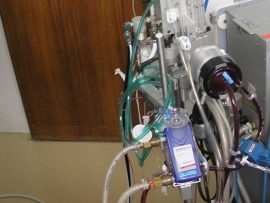
Abstract Background: The mortality rate for a patient with a refractory cardiogenic shock on venoarterial (VA) extracorporealmembrane oxygenation (ECMO) remains high, and hyperoxia might worsen this prognosis. The objective of..
Read More
Abstract Controlled donation after circulatory death (cDCD) has contributed to increasing donor numbers all over the world. Experiences published in the last years confirm that the outcomes after lung transplantation..
Read More
DOES18 Las Vegas — Burnout is a hot topic in today's workplace, given its high costs for both employees and organizations. What causes this problem? And what can be..
Read More
Abstract Heart Pumps: A Life-Extending Option for Thousands Historically, many advanced heart failure patients who don't qualify for a heart transplant rely on medication or are referred to palliative care..
Read More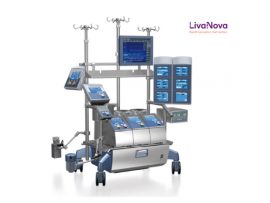
Abstract The optimal setting to achieve a suitable PaCO2 value of 35–45 mmHg upon initiating cardiopulmonary bypass (CPB) in the pediatric population is undefined in the literature. Sweep gas is set..
Read More
Abstract Extracorporeal CO2 removal (ECCO2R) was introduced in 1977 to control arterial CO2 tension and reduce ven- tilation, thus allowing lung rest in patients with acute respiratory failure (ARF). Its..
Read More
Abstract OBJECTIVE: Patient selection for pediatric extracorporeal membrane oxygenation (ECMO) support has broadened over the years to include children with pre-existing neurologic morbidities. We aimed to determine the prevalence and..
Read More
Abstract Venovenous extracorporeal membrane oxygenation (VV ECMO) has been used to treat severe coronavirus disease 2019 (COVID-19) acute respiratory distress syndrome; however, patient selection criteria have evolved throughout the pandemic...
Read More
Controle da Pressão e respostas hormonais Prof. Elio Carvalho é Biomédico, Microbiologista e Perfusionista pela Unicamp, CLAP e SBCEC. É perfusionista do Hospital de Clínicas da Unicamp e Coordenador do..
Read More
Results of HA 380 by Dr Zeraatian Dr.Sam Zeraatian Nejad Davani, CEO of rockingham medical research ADKWA center as well as Head of IUMS transplant and cardiovascular surgery department...
Read More
Beating on pump CABG in patient with LVEF 15 and severe MR undergone CABG and MVr beating manner 1 with glubran II in proximal anastomoses. Dr.Sam Zeraatian Nejad Davani,..
Read More
Abstract Extracorporeal membrane oxygenation (ECMO) is a lifesaving support for respiratory and cardiovascular failure. However, ECMO induces a systemic inflammatory response syndrome that can lead to various complications, including endothelial..
Read More
Abstract Heart transplantation results in complete denervation of the donor heart with loss of afferent and efferent nerve connections. The majority of patients remain completely denervated during the first 6–12..
Read More
Abstract Exchanging circuits in patients undergoing extracorporeal life support (ECLS) for component failure can be a life-threatening endeavor if the patient has no native organ function and is fully dependent..
Read More
Abstract OBJECTIVES Colloid oncotic pressure (COP) is an important factor in cardiac surgery, owing to its role in haemodilution. The effect of cardiopulmonary bypass prime fluids on the COP..
Read More
Abstract Extracorporeal hemoadsorption with the CytoSorb adsorber is increasingly being used during the past years. The use in combination with extracorporeal membrane oxygenation (ECMO) is feasible, but frequency of its use and..
Read More
Abstract Intensive care unit (ICU) patients with end‑organ failure will require specialised machines or extracorporeal therapiesto support the failing organs that would otherwise lead to death. ICU patients with severe..
Read More
Abstract Background Nicorandil, an adenosine triphosphate-sensitive potassium channel agonist and nitric oxide donor, is a coronary vasodilator used to treat ischemia-induced chest pain, but it's potential cardioprotective benefits during open..
Read More
Abstract 54-year-old man suffered a self-inflicted penetrating chest wound from an automated crossbow used for hunting large animals (), with an entrance wound in the left third intercostal space and..
Read More
Abstract Importance Patient safety is a US national priority, yet lacks a comprehensive assessment of progress over the past decade. Objective To determine the change in the rate of adverse events in..
Read More