
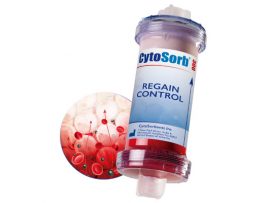

Cambio del CytoSorb Antes de la conexión de CytoSorb, el sistema de línea de entrada debe cebarse previamente con solución salina isotónica estéril sin aire. [pdf-embedder url="https://perfusfind.com/wp-content/uploads/2021/02/Cambio-del-CytoSorb-Guía-rápida-de-configuración_compressed.pdf" title="Cambio del CytoSorb..
Read More
Hemoperfusión con CytoSorb Antes de la conexión de CytoSorb, el sistema de tubos de entrada debe cebarse previamente con solución salina isotónica estéril sin aire. [pdf-embedder url="https://perfusfind.com/wp-content/uploads/2021/02/Hemoperfusión-con-CytoSorb-Guía-rápida-de-configuración_compressed.pdf" title="Hemoperfusión con..
Read More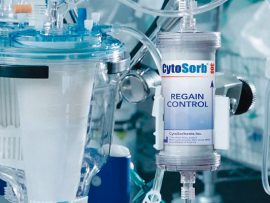
ECMO con CytoSorbECMO con CytoSorb El tratamiento con CytoSorb se aplicó de forma prospectiva y se analizó de forma retrospectiva en el grupo de control, en los pacientes con..
Read More
CPB with CytoSorb – Intraoperative Use (video). Setup the cardiopulmonary bypass machine completely according to the operating instructions of the device manufacturer (including priming). [pdf-embedder url="https://perfusfind.com/wp-content/uploads/2021/02/CPB-with-CytoSorb-–-Intraoperative-Use-Quick-Setup-Guide_compressed.pdf" title="CPB with CytoSorb –..
Read More
CEC con CytoSorb - Uso intraoperatorio Preparar por completo la máquina cardiopulmonar según las instrucciones de uso del fabricante (incluyendo el cebado). [pdf-embedder url="https://perfusfind.com/wp-content/uploads/2021/02/CEC-con-CytoSorb-Uso-intraoperatorio-Guía-rápida-de-configuración_compressed.pdf" title="CEC con CytoSorb – Uso intraoperatorio..
Read More
Abstract Objective Remote (RIPC) exerts effects in models of cerebral . The authors tested the hypothesis that RIPC decreases the incidence of and prevents deterioration of short-term postoperative cognitive function in isoflurane-fentanyl-anesthetized patients undergoing..
Read More
Abstract The Fontan operation places the systemic and pulmonary circulations in series, driven by a single ventricular chamber. It has become the treatment strategy of choice for palliating single-ventricle congenital..
Read More
Abstract Background Heparin dosage for anticoagulation during cardiopulmonary bypass (CPB) is commonly calculated based on the patient's body weight. The protamine–heparin ratio used for heparin reversal varies widely among institutions..
Read More
Abstract The cardiovascular consequences of cocaine use are numerous and can be severe, with mechanisms of cardiotoxicity unique to cocaine that include sympathomimetic effects, blockade of sodium and potassium channels,..
Read More
Abstract Hemolysis is a common complication of extracorporeal membrane oxygenation (ECMO) support and is associated with increased mortality. Frequent monitoring of markers of hemolysis is performed at ECMO centers. We..
Read More
Abstract Aim: The aim of this study was to ascertain if a score, directly derived from CPB records, could correlate to major postoperative outcomes. Methods: An additive score (QualyP Score)..
Read More
Abstract Ischaemic preconditioning is one of several different techniques that have been proposed to render the heart more resistant to ischaemia/reperfusion injuries. A significant reduction of troponin release is ‘proof..
Read More
Abstract Objectives: The armamentarium of cardiac surgery continues to expand, and the cardiac intensivist must be familiar with a broad spectrum of procedures and their specific management concerns. In the..
Read More
Abstract Objectives: Extracorporeal lung support is currently used in the treatment of patients with severe respiratory failure until organ recovery and as a bridge to further therapeutic modalities. The aim..
Read More
Abstract Background: Glucose–insulin–potassium (GIK) administration during cardiac surgery inconsistently improves myocardial function, perhaps because hyperglycemia negates the beneficial effects of GIK. The hyperinsulinemic normoglycemic clamp (HNC) technique may better enhance..
Read More
Abstract Excessive haemodilution and the resulting anaemia during CPB is accompanied by a decrease in the total arterial oxygen content, which may impair tissue oxygen delivery. Hyperoxic ventilation has been..
Read More
Abstract Objective induces in the small . One reason for this damage is a perfusion shift from the muscular toward the mucosal layer. This study investigated the effect of this perfusion shift..
Read More
Abstract Background Peritoneal carcinomatosis (PC) results from the secondary spread of many intraabdominal tumour types, such as colorectal malignancy (colorectal cancer, CRC), disseminated peritoneal adenomucinosis (DPAM), appendiceal cancer, ovarian carcinoma,..
Read More
Abstract Widespread use of clinical checklists is relatively new to health care. Anesthesiology has borrowed lessons from aviation safety since the late 1970s, but checklists only reached a tipping point..
Read More
Abstract Rationale: Recent pediatric studies suggest a survival benefit exists for higher-volume extracorporeal membrane oxygenation (ECMO) centers. Objectives: To determine if higher annual ECMO patient volume is associated with lower..
Read More
Abstract Background: Postoperative delirium is common in patients recovering from cardiac surgery. Tight glucose control has been shown to reduce mortality and morbidity. Therefore, the authors sought to determine the..
Read More
Abstract This discussion paper presents proposed recommendations for in the Australasian clinical setting based on underlying evidence-based principles and an understanding of local factors which may limit the provision of ideal..
Read More
Abstract , a , has recently emerged as a valuable agent in the peri-operative management of cardiac surgery patients. Levosimendan is a calcium-sensitising ionodilator. By binding to C and reducing its co-efficient, it..
Read More
Abstract Rationale: We developed an innovative, minimally invasive, highly efficient extracorporeal CO2 removal (ECCO2R) technique called respiratory electrodialysis (R-ED). Objectives: To evaluate the efficacy of R-ED in controlling ventilation compared with..
Read More
Abstract Background The impact of transfusion of aged red blood cells (RBCs) on the outcome after (CABG) is controversial. This issue has been investigated in the present study. Materials and methods..
Read More
Abstract Background: Coronary artery bypass surgery is the most commonly performed cardiac operation and approximately 40-70% of patients require a blood transfusion despite improvements in cardiac surgical techniques. Some preventive..
Read More
Abstract Objective: To assess whether preoperative versus intraoperative insertion of an intra-aortic balloon pump is associated with lower 30-day mortality or reduced length of hospital stay among patients who had..
Read More
Abstract We conducted a prospective, observational study to determine the incidence of feeding intolerance (FI) within 7 d of initiating enteral nutrition (EN) in patients undergoing cardiopulmonary bypass (CPB) and..
Read More
Abstract Objectives To explore the preoperative, intraoperative, and postoperative dynamics of heparin-binding protein (HBP) in cardiothoracic surgery. Design This was a prospective, observational study. Setting The study was conducted at..
Read More
Abstract Objective To assess whether the administration of the ultra-short–acting β-blocker esmolol in cardiac surgery could have a cardioprotective effect that translates into improved postoperative outcomes. Design Single-center, double-blinded, parallel-group..
Read More