


Abstract Background Inflammatory markers, such as neutrophils and lymphocytes, for of postoperative morbidity and mortality in patients with cardiovascular disease may provide benefit for patient selection for cardiac surgery. This study..
Read More
Platelet, Red Cell, and Endothelial Activation and Injury During Extracorporeal Membrane Oxygenation
Abstract Extracorporeal membrane oxygenation (ECMO) can be lifesaving but suffers from high rates of bleeding and repeated transfusions. Current monitoring of blood cell damage during ECMO is limited to platelet..
Read More
Abstract Deep hypothermic circulatory arrest (DHCA) technique has been an important armamentarium in the correction of congenital heart diseases. There have been many controversies and concerns associated with DHCA, particularly..
Read More
Abstract The use of total circulatory arrest (TCA)/deep hypothermic circulatory arrest (DHCA) as a support modality in congenital heart surgery is a time-tested strategy. However, with technological advances, the widespread..
Read More
Abstract Heparin-induced thrombocytopenia (HIT) is a severe, immune-mediated, adverse drug reaction that paradoxically induces a prothrombotic state. Particularly in the setting of cardiac surgery, where full anticoagulation is required during..
Read More
Abstract Objectives The purpose of the present study was to describe how the perioperative hemodynamic profile before and after cardiopulmonary bypass during cardiac surgery is influenced by age and to..
Read More
Abstract Background and Aim of the Study Intra‐aortic balloon pump (IABP) is the most commonly used device for circulatory support of patients with heart disease. The aim of this study..
Read More
Abstract Takotsubo syndrome (TTS) has been a recognized clinical entity for 31 years, since its first description in 1990. TTS is now routinely diagnosed in patients who present with acute..
Read More
Abstract Background Pulmonary dysfunction is a known complication after cardiac surgery using cardiopulmonary bypass, ranging from subclinical functional changes to prolonged postoperative ventilation, acute lung injury, and acute respiratory distress..
Read More
Abstract Background Recent trials have shown hydroxyethyl starch (HES) solutions increase the risk of acute kidney injury (AKI) in critically ill patients. It is uncertain whether these adverse effects also..
Read More
Abstract Background. Nontuberculous mycobacteria (NTM) commonly colonize municipal water supplies and cause healthcare-associated outbreaks. We investigated a biphasic outbreak of Mycobacterium abscessus at a tertiary care hospital. Methods. Case patients had recent..
Read More
Abstract BACKGROUND Systemic inflammatory response syndrome (SIRS) is frequent after cardiac surgery, but data on its incidence and perioperative risk factors are scarce for children with congenital heart disease. METHODS..
Read More
Abstract Background Inflammation after cardiopulmonary bypass may contribute to postoperative delirium and cognitive dysfunction. The authors evaluated the effect of high-dose methylprednisolone to suppress inflammation on the incidence of delirium..
Read More
Abstract The use of mechanical circulatory support (MCS) devices is a viable therapeutic treatment option for patients with congestive heart failure. Ventricular assist devices, cavopulmonary assist devices, and total artificial..
Read More
Abstract Background: Cardiac surgery-associated acute kidney injury (CSA-AKI) is a common complication and is associated with the poorest outcomes. Therefore, early prediction of CSA-AKI remains a major issue. Severity scores..
Read More
Abstract Background Previous studies have analyzed the efficacy of crystalloid , but the use of (Genzyme Corp, Boston, MA) as a crystalloid cardioplegic solution has not been evaluated. Methods In this observational..
Read More
Abstract Objectives: Pao2/Fio2 is used commonly for diagnosis of lung injury (acute respiratory distress syndrome and transfusion-related acute lung injury), for assessment of pulmonary disease course and therapy, and in pulmonary..
Read More
Abstract Background: We sought to determine whether the introduction of a new anticoagulation protocol improved the frequency with which target anticoagulation parameters were met in children supported with extracorporeal membrane..
Read More
Abstract Background Moderate (MHCA) versus deep (DHCA) hypothermia for circulatory arrest in has been purported to reduce and bleeding complications, although there are limited data supporting this claim. This study aimed to..
Read More
Abstract Purpose Hemorrhage is the most common cause of preventable death after trauma. Coagulopathy plays a central role in uncontrolled bleeding and is caused by multiple factors. Extracorporeal Membrane Oxygenation..
Read More
Abstract Background To identify novel factors associated with the survival of septic adults receiving (ECMO) to improve patient selection and outcomes. Methods Cases were identified from our ECMO registry from 2001..
Read More
Abstract Aim: We sought to quantify the location and volume of thrombus in used hollow-fiber membrane oxygenators and correlate the volume of thrombus with patient demographics, flow characteristics and anticoagulation..
Read More
Abstract Peripartum cardiomyopathy (PPCM) is a rare disorder of unknown etiology and pathogenesis. The most important tool for diagnostic confirmation is transthoracic echocardiography. The recommended management of PPCM in pregnancy..
Read More
Abstract Background Cardiac arrest caused by accidental hypothermia is a rare phenomenon with a significant mortality rate if untreated. The consensus is that these patients should be rewarmed with extracorporeal..
Read More
Abstract Cardiopulmonary AG, Rastatt, Germany) can be effective in patients requiring venovenous extracorporeal membrane oxygenation (VV-ECMO) for adult respiratory distress syndrome (ARDS). Proper placement of the cannula is important in..
Read More
Abstract Nosocomial blood stream infections (BSIs) increase both the morbidity and the mortality of patients receiving extracorporeal life support (ECLS). The aim of this study was to identify common practices..
Read More
Abstract Background There is recent evidence to show that patients suffering from acute kidney injury are at increased risk of developing chronic kidney disease despite the fact that surviving tubular..
Read More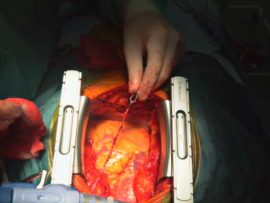
Despite improvements in percutaneous coronary artery intervention (PCI), coronary artery bypass grafting (CABG) remains the gold standard therapy for the majority of patients with multivessel coronary artery disease. This..
Read More
Abstract Perioperative myocardial infarction represents the most common cardiovascular complication following non-cardiac surgery, but frequently presents without the usual clinical signs and symptoms consistent with acute coronary syndrome. Given the..
Read More
Abstract This retrospective, observational study compared the impact of a point-of-care rotational thromboelastometry (ROTEM®) method versus conventional bleeding management in terms of postoperative (24-h) blood loss, intraoperative and postoperative (24-h)..
Read More