
Mitral atresia and hypoplastic left ventricle
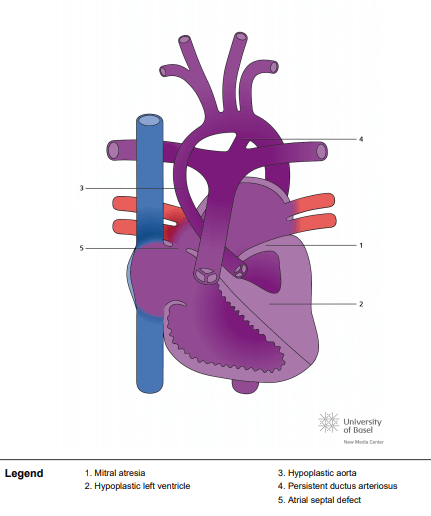

Mitral atresia is a rare congenital heart defect. This rarity has been reported when compared to atresia of other valves.[1] Embryologically, this defect has been attributed to a malaligned ventricular and or atrial septum,[2] defect of the atrioventricular canal[3] as well as the excessive growth of the endocardial cushion.[4]
This condition is often associated with other congenital heart defects. These include patent ductus arteriosus, coarctation of the aorta, transposition of the great arteries, pulmonary stenosis, shunt defects, cor triatriatum, chamber, and valvular anomalies. There have been few reports of mitral atresia including that of the first of a set of twin diagnosed with mitral atresia; hypoplastic left ventricle, ventricular septal defect (VSD), D-transposition of the great vessels, severe pulmonary stenosis, and hypoplastic pulmonary arteries at 33 weeks gestation.[5]
Clinical presentation depends on the types and severity of the accompanying anomalies, however, most patients present with respiratory difficulty, cyanosis, failure to thrive, poor peripheral pulses, and congestive cardiac failure. Although cardiac catheterization and cardiac angiography are the mainstay in the evaluation of these patients, ultrasonography remains an effective alternative in the evaluation of the mitral valve especially in resource-poor countries with limited facilities.[6]
Some authors have proposed to classify mitral atresia based on the position of the great vessels, the size of the left ventricle and the presence or absence of a ventricular outflow obstruction.[7] This report describes the presence of this rare anomaly in the presence of a hypoplastic left ventricle, large atrial septal defect (ASD), and VSD in a 5-month-old infant.